Mounting
Window Mount
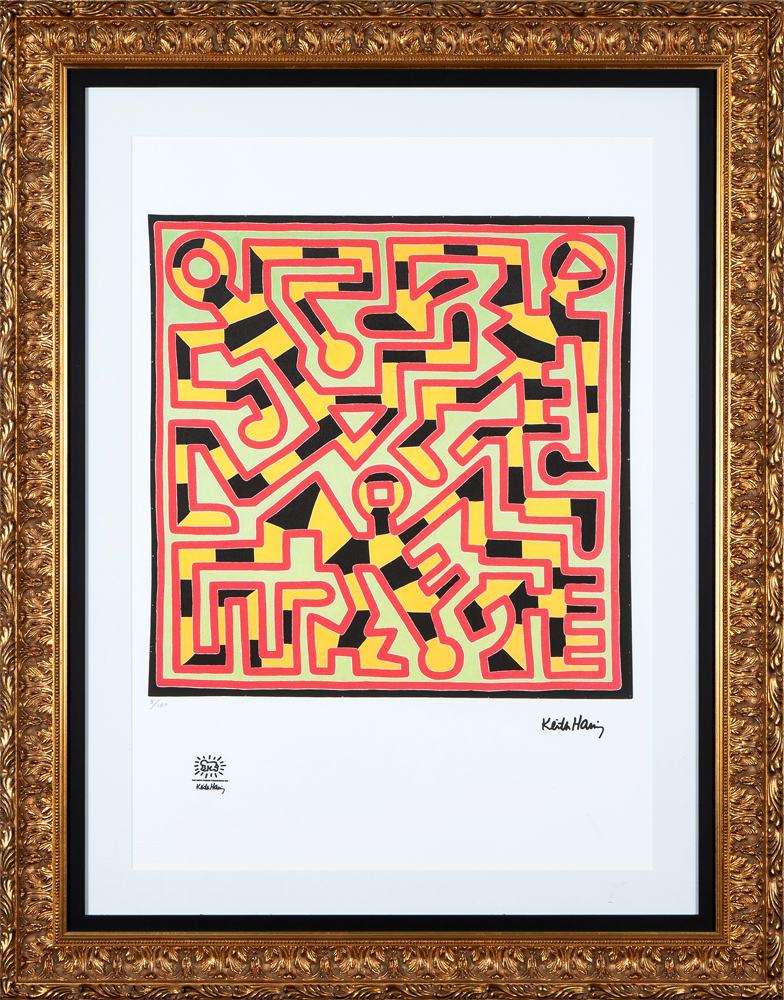
Often called a “mat” or “passe-partout,” this technique creates a window effect around your artwork, forming a clean border and separation from the frame. The window mount sits at the front, with an aperture cut to showcase your piece, while a second card provides sturdy backing.
Our window mounts are crafted with a precise 45-degree bevel edge and can be paired with a secondary, inner mount to highlight a chosen colour from the artwork. We use only acid-free mount boards, safeguarding your artwork from damage that less expensive materials can cause.
With our advanced computerised mount cutter, we’re able to produce intricate shapes and multi-aperture mounts tailored to any design.


Float Mount
Float mounting, often called "floating," is a method where your artwork is positioned on top of a solid mount board rather than behind a cut-out window in the board. This approach is especially popular for modern artworks and is ideal for pieces with "deckled" or torn edges, as it allows the entire artwork to be visible.
For less expensive works, acid-free double-sided tape is used to attach the piece to the backing board. For more valuable or sentimental pieces, a conservation-friendly technique is employed to ensure the artwork can be removed easily from the frame without damage, maintaining its original condition.
When using this mounting style, it is recommended to pair it with a deep frame so that spacers can be included to prevent the artwork from touching the glass, protecting it effectively.
Raised Float Mount
This method also creates the illusion that your artwork is "floating" within the frame, but adds a gap between the backing board and the artwork, resulting in a striking shadow effect around the edges.
Like traditional float mounting, acid-free double-sided tape is used to attach the artwork to the backing board. For more valuable or sentimental pieces, we use a conservation method where the artwork is floated on a slightly smaller backing board that remains hidden. This board is then raised on a foam core, enhancing the floating effect and creating a dramatic "float" appearance.


No Mount
For a clean, minimalist look, you might consider framing your artwork right up to the edge of the paper while still protecting it completely by spacing it away from the glazing.
In this method, the artwork rests on a spacer and is supported from behind by a thick core mount board. For larger pieces, we may need to "float" the artwork on a backing card to prevent it from sagging through the spacers.
The spacer that separates the glass and artwork can be matched to the paper color, the frame’s outer color, or a color drawn from the artwork itself to create a cohesive appearance.